Docker apps
This article refers to Platform v3.1.0. The current Platform version is v3.2.0.
Overview
The Docker Apps section in the Batch Wizard allows you to manage Docker applications across multiple edge nodes efficiently. It provides a set of commands to install, delete, run, and stop Docker applications in batch mode, streamlining the deployment and management process. Each command offers specific options and settings tailored to the needs of your edge environment, enabling centralized control over application instances.
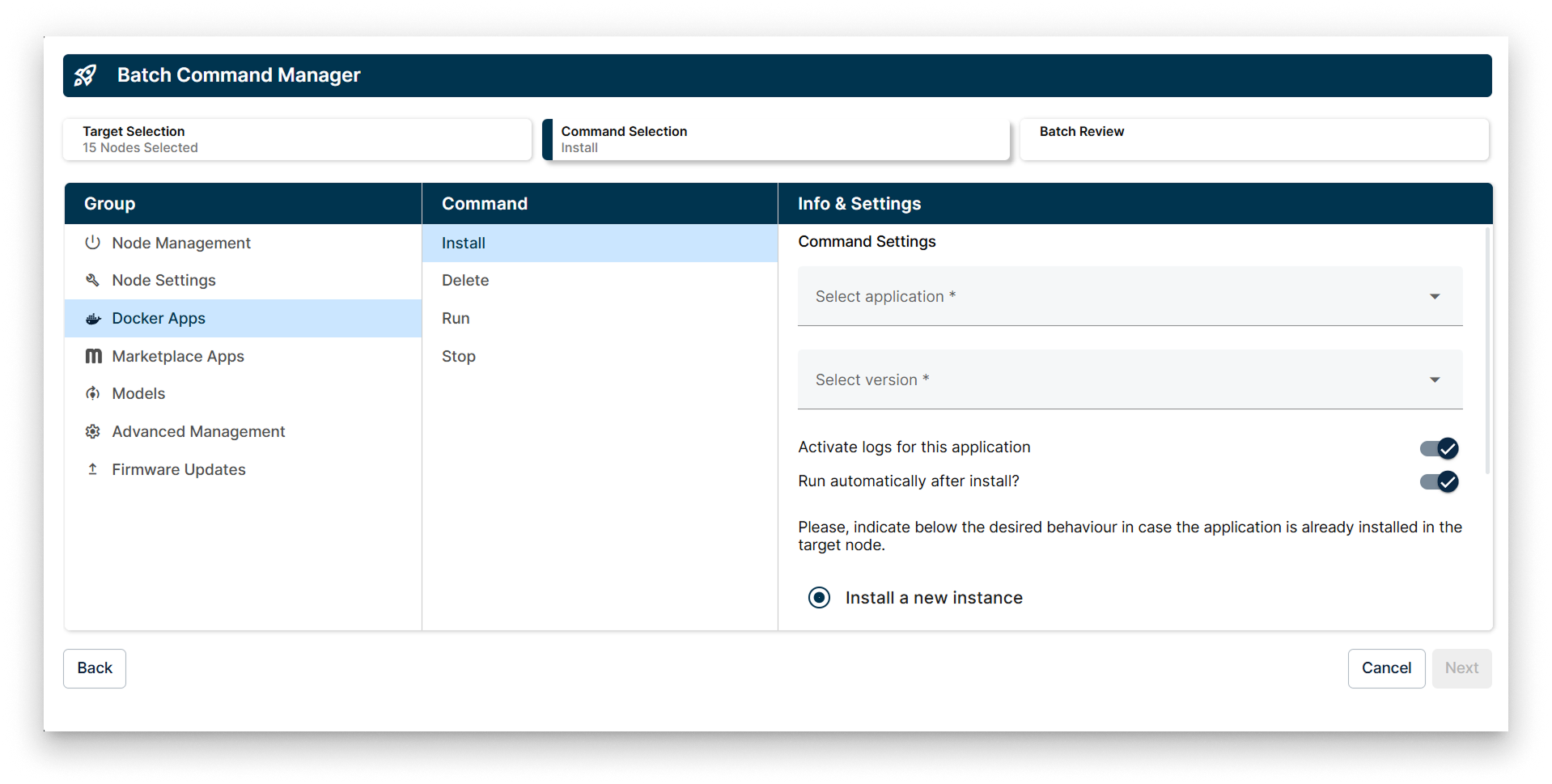
Docker Apps options
Commands in Docker Apps
1. Install
The Install command lets you deploy Docker applications to your selected edge nodes. You can choose the application and version to install, activate logs for monitoring, and decide whether the application should run automatically after installation.
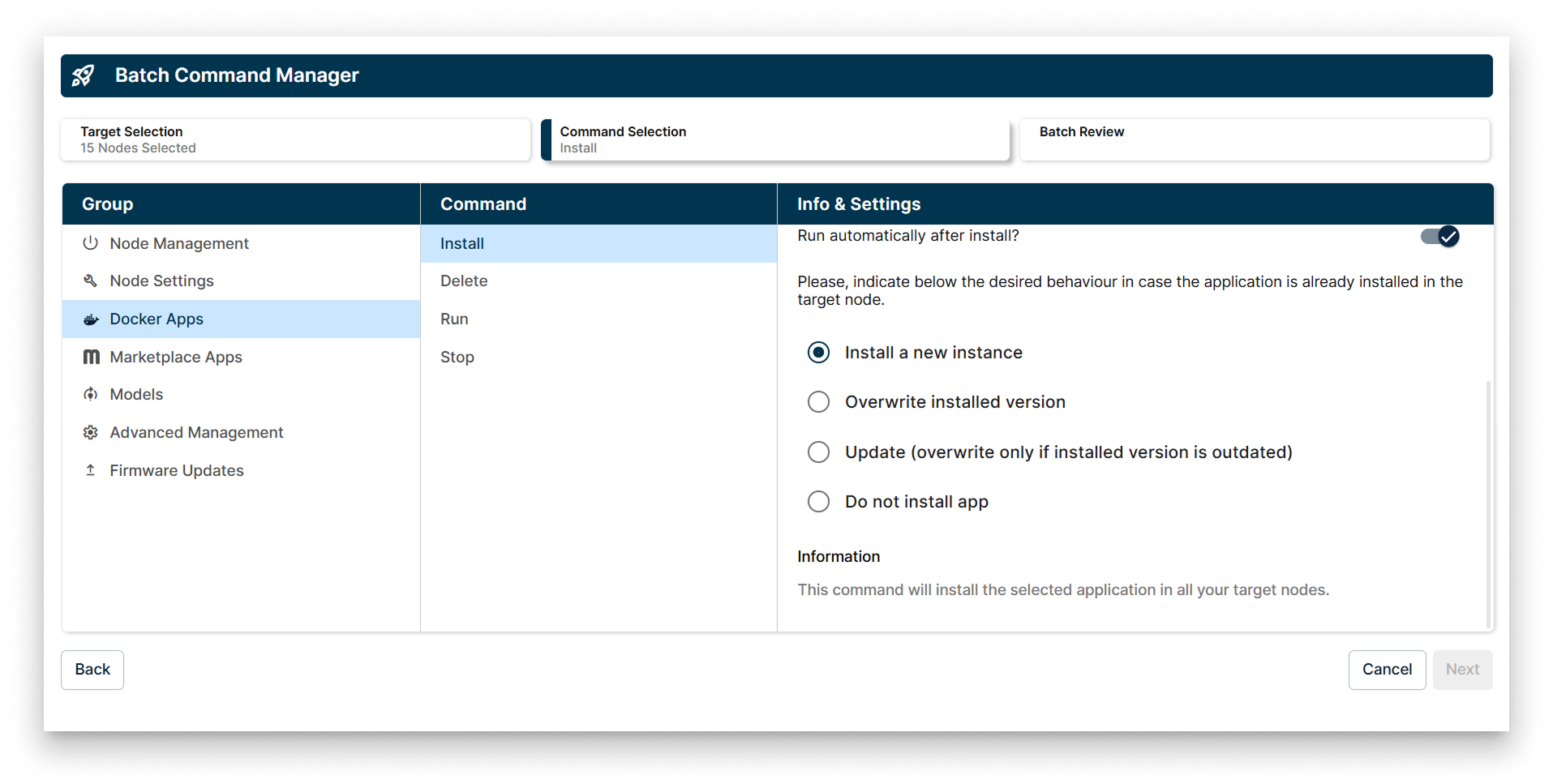
Install Policy the Docker Apps Batch Wizard
If the application is already installed on the target edge node, you have four options to specify the desired behavior:
- Install a new instance of the application
- Overwrite the already installed application
- Update (overwrite only if the installed version is outdated)
- Do not install the application
2. Delete
The Delete command removes Docker applications from the selected edge nodes. This operation helps maintain a clean environment by removing unused or outdated applications.
If more than one instance of the application is available on the target edge node, the delete command will be applied to all instances in parallel.
3. Run
The Run command starts the selected Docker application instances on the target edge nodes. This is useful for activating applications that are installed but currently stopped.
If multiple instances of the application exist on the target edge node, the run command will be executed on all instances simultaneously.
4. Stop
The Stop command halts running Docker application instances on the selected edge nodes, allowing you to pause or safely shut down applications as needed.
If more than one instance of the application is running on the target edge node, the stop command will be applied to all instances in parallel.